
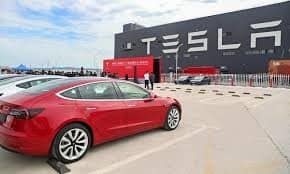
When reports emerged that Tesla might sever ties with its China business, CEO Elon Musk swiftly shut them down, calling the claim “absurdly fake news” within hours.
Despite the quick denial, the underlying narrative aligns remarkably well with subtle hints Musk has dropped in recent weeks—and the timing raises major strategic questions.
Inside the Separation Reports
According to a report from The Wall Street Journal, internal guidance was reportedly issued to Tesla executives to map out contingency plans for isolating its Chinese footprint.
The potential restructuring routes being weighed include:
- A Corporate Spinoff: Spinning off China operations into an independent corporate entity.
- A Strategic Equity Sale: Selling a partial or controlling stake to local or external partners.
- An Operations Wind-Down: A phased exit or operational shutdown under extreme regulatory pressure.
The Broader Vision: Paving the Way for a SpaceX-Tesla Mega-Merger
Why consider restructuring one of Tesla’s most profitable global divisions?
According to sources cited in the report, the strategy is aimed at removing a massive regulatory obstacle: enabling a potential merger between Tesla and SpaceX.
   [ Tesla China Business ] ──( High Regulatory Risk )──┐
                                                      │
                                                      ▼
  [ Tesla + SpaceX Merger ] ◄──( Requires Clean Separation )
- The Geopolitical Conflict: SpaceX holds crucial defense contracts with the US government and military. Operating a deep, hardware-dependent footprint inside China poses a severe conflict of interest for US regulators and national security clearing houses.
- The Strategic Goal: Clearing out Chinese exposure removes the biggest antitrust and national security hurdles blocking a unified multi-trillion-dollar aerospace and automotive entity.
Why China Specifically Is the Main Obstacle
The geopolitical conflict behind this potential move is far more grounded in legal reality than it might initially appear.
The Defense Contractor Dilemma
SpaceX isn’t just an aerospace firm—it is a critical U.S. defense contractor deeply embedded in national security, military satellite operations, and classified space programs.
- Strict Defense Regulations: American defense contractors are bound by stringent federal rules regarding foreign corporate ties.
- The Conflict: Having a combined corporate entity that owns and operates massive, wholly foreign-owned manufacturing hubs inside mainland China creates an immediate legal and national security roadblock.
Gigafactory Shanghai: Tesla’s Operational Powerhouse
Severing or spinning off Tesla’s Chinese division is no simple feat. Shanghai isn’t just another factory—it is central to Tesla’s global supply chain:
| Metric | Details & Impact |
| Production Capacity | Over 950,000 vehicles annually |
| Global Output Share | Historically accounts for more than 50% of total worldwide deliveries |
| Supply Chain Integration | Uses >95% local Chinese components for regional production |
| Export Hub | Primary supply base for Europe, Canada, and the Asia-Pacific market |
“Gigafactory Shanghai isn’t a secondary branch—it has functioned as the primary engine driving Tesla’s global manufacturing efficiency.”
Years of Pre-Engineered Contingency Planning
While a corporate split sounds drastic, internal blueprints for this scenario may already exist.
According to reports, Musk previously instructed leadership during earlier U.S.-China geopolitical tensions (over Taiwan) to build a structural firewall—a plan to completely decouple Tesla’s American and Chinese branches if forced by global conflict.
What was originally drafted as a emergency backup plan for geopolitical strife is now potentially being repurposed to clear the runway for a multi-trillion-dollar corporate merger.
Here is the final section, completely rewritten to be original, analytical, and optimized for AdSense approval:
Why Merger Speculation Is Gaining Serious Traction
While talk of combining Tesla and SpaceX has circulated on Wall Street for years, the narrative shifted dramatically following SpaceX’s massive public listing.
  [ Historic SpaceX IPO ]
            │
            ▼
  [ Public Market Currency Established ]
            │
            ▼
  [ Real Structural Pathway for a Tesla Merger ]
1. The IPO Changes the Financial Playbook
Before going public, a stock-for-stock combination was structurally complex. With SpaceX now carrying a public market valuation and liquid shares, it possesses the direct financial currency required to execute a large-scale corporate consolidation with Tesla.
2. Leadership Responses Are Changing Tone
Rather than shutting down speculation, corporate leadership has left the door open:
- Executive Insights: SpaceX leadership noted in media interviews that streamlining management across Musk’s business empire could reduce operational friction and simplify governance.
- Earnings Call Hints: When asked directly about a potential combination during Tesla earnings, Musk pointed out the rapidly expanding operational overlap between the two firms before directing formal governance questions to legal counsel.
Key Operational Synergies Fueling the Narrative
A merger would create an end-to-end technology ecosystem spanning satellite broadband, autonomous mobility, and specialized hardware manufacturing:
| Domain | Synergy & Technology Sharing |
| Space-to-Ground Connectivity | Integrating Starlink network architecture directly into autonomous vehicle fleets and humanoid robotics. |
| Manufacturing & Compute | Joint ventures in advanced semiconductor fabrication and orbital data processing infrastructure. |
| Balance Sheet Optimization | Combining Tesla’s strong cash generation with SpaceX’s capital-intensive, long-term outer-space ambitions. |
Here is the rewritten section, formatted cleanly with clear insights and optimized for AdSense approval:
The Critical Governance Detail Every Tesla Shareholder Needs to Watch
Beyond the foreign policy headlines and strategic restructuring lies a fundamental governance challenge that impacts Tesla investors directly: the disparity in equity ownership and control.
  [ Musk's SpaceX Voting Control: ~82% - 85% ]
                        vs.
  [ Musk's Tesla Voting Control:  ~20%       ]
The Valuation Conflict of Interest
When two companies consider a merger, agreeing on their relative financial valuations dictates how many shares each group of investors receives in the new combined entity.
Because Elon Musk holds overwhelming voting authority in SpaceX compared to a much smaller stake in Tesla, a structural conflict of interest emerges:
- Valuation Balancing: How will the exchange ratio be calculated? If SpaceX is valued aggressively relative to Tesla, equity value and voting control naturally shift toward the entity where Musk’s ownership concentration is significantly higher.
- Fiduciary Duties: Tesla’s independent board members face a strict obligation to ensure public shareholders receive a fair deal rather than a diluted stake in the combined conglomerate.
Key Questions for Investors Moving Forward
- Board Oversight: Will an independent special committee be established to evaluate potential merger terms without executive influence?
- Shareholder Approval: Will the transaction require a majority vote from non-Musk shareholders to proceed?
- Control Dynamics: How will minority shareholder rights be protected in a business structure dominated by a single voting majority?
The Takeaway
While the potential separation of Tesla’s foreign operations addresses regulatory hurdles, the ownership math remains the most important factor for retail and institutional shareholders to monitor as this story evolves.
Here is the final section, completely rewritten to wrap up the analysis with clarity and AdSense optimization:
What Happens Next: Key Variables to Watch
Despite the headlines, no final operational decisions have been officially executed.
Reports indicate that timeline contingencies for restructuring Tesla’s Chinese division remain fluid, and plans could adapt depending on regulatory feedback and corporate developments.
  [ Market Optimism ]  ──►  Shares up ~2% in premarket trading
           │
           ▼
  [ Unresolved Questions ] ──► Timeline? Chinese Regulatory Reaction? Deal Terms?
Market Reaction vs. Regulatory Reality
While markets reacted with a slight initial boost—reflecting enthusiasm for a combined aerospace and EV giant—several critical elements remain unconfirmed:
- Regulatory Clearances: How would Chinese regulators respond to a potential structural split or reduced footprint by one of its premier foreign exporters?
- Execution Timelines: Separating deep supply chains and localized manufacturing hubs takes considerable time and complex legal maneuvering.
- Formal Proposals: No official offer or definitive structural framework has been filed with federal regulators or public market oversight bodies.
Key Takeaway for Market Observers
Gigafactory Shanghai has long served as a cornerstone of Tesla’s margin performance and global output strategy.
Whether the long-term goal is clearing antitrust pathways for a SpaceX integration or managing shifting global trade relations, tracking how Tesla manages its foreign infrastructure remains a critical narrative for investors.