
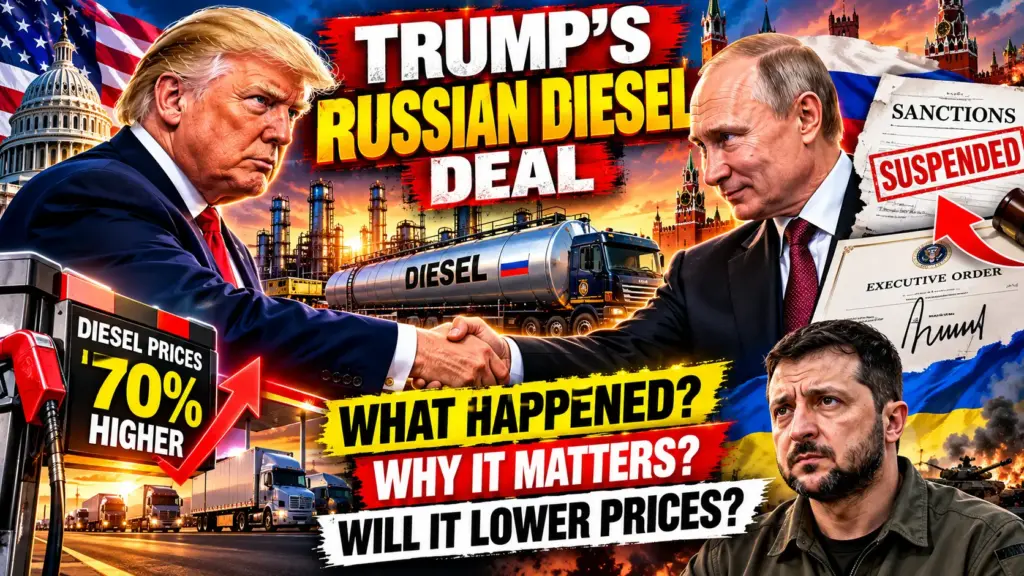
Two weeks before the midterm elections, President Trump has done something that has angered members of both parties: he struck a Russian diesel deal with Vladimir Putin, then used an executive order to put a hold on a sanctions package Congress had passed with large majorities.
The administration says the goal is simple. Diesel prices have surged, and more supply should help. Critics say the deal rewards Moscow while doing little for American drivers and truckers. Here’s what was actually agreed, what the experts are saying about the impact, and why the fight matters beyond the headlines.
- Why Memory Chip Stocks Crashed This Week
- Inflation Jumped to 3.7% in September.
- Social Security Benefits Will Rise 3.6% in 2027
What the Russian Diesel Deal Actually Says
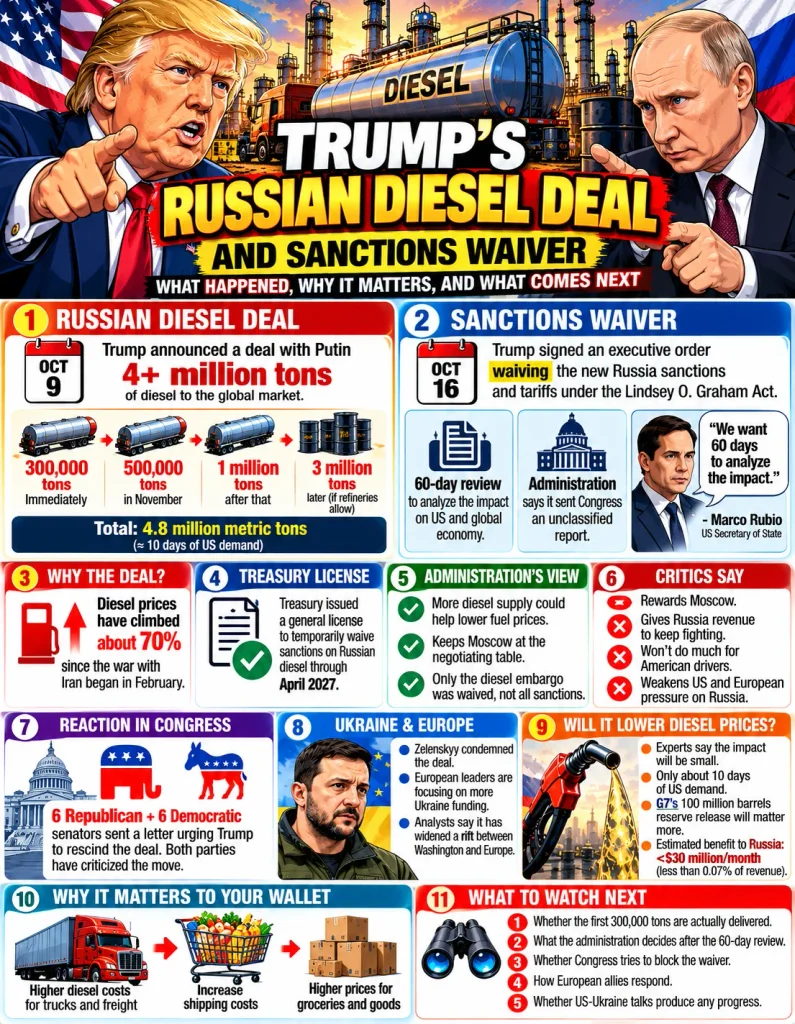
On Friday, October 9, Trump announced that Putin had agreed during a phone call to supply more than 4 million tons of diesel to the global market. According to Trump’s post, Russia would immediately release about 300,000 tons, followed by 500,000 tons in November and 1 million tons after that. A further 3 million tons would follow depending on the condition of Russia’s refineries. CNBC later put the total at 4.8 million metric tons, which it described as equal to about ten days of US demand.
To make the sales legal, the Treasury Department issued a general license the same day that temporarily waives sanctions on Russian diesel through April 2027.
The backstory is a diesel shortage. Prices have climbed about 70% since the war with Iran began in February, and Ukraine’s strikes on Russian refineries had pushed Moscow to ban its own diesel exports. Trump briefly considered banning US diesel exports last month but backed off after the oil industry warned it would only drive up gasoline prices.
The Second Move: Waiving the New Russia Sanctions
A week later, on October 16, Trump signed an executive order waiving the new sanctions and tariffs provided for under the Lindsey O. Graham Sanctioning Russia Act. That’s the bill we covered when the sanctions bill cleared the Senate in July, which allowed tariffs of up to 100% on major buyers of Russian oil. It passed both chambers with strong majorities and was signed into law.
That Russia sanctions waiver is the part drawing the sharpest criticism. The law itself includes waiver authority, and it requires the administration to send Congress an unclassified report explaining the decision. The White House says it did. Secretary of State Marco Rubio said the president wants 60 days to analyze the sanctions’ impact on the US and global economy. Trump called it a “very good decision” and argued it keeps Moscow at the negotiating table over the war in Ukraine.
Treasury Secretary Scott Bessent pushed back on the idea that Russia got relief. He said on Sunday that only the diesel embargo was waived to help lower fuel prices, and that sanctions had not been lifted. Critics see the two moves as part of the same pattern. Whether you call it a narrow waiver or a loosening of pressure largely depends on which sanctions you’re looking at, and that disagreement is at the heart of the political fight.
Why Both Parties Are Pushing Back
Reaction in Congress has been unusually bipartisan. A group of six Republican and six Democratic senators sent Trump a letter on October 13 urging him to rescind the deal, calling it a betrayal of Ukraine and arguing it would give Russia revenue to keep fighting. Republican Sen. Lisa Murkowski said the administration should use the law to increase pressure instead. On the Democratic side, Rep. Steny Hoyer called it outrageous to buy Russian diesel so soon after signing tough sanctions legislation.
Ukrainian President Volodymyr Zelenskyy condemned the deal right away. European leaders responded by putting Ukraine funding at the center of the European Council summit that followed, and analysts say the episode has widened a rift between Washington and Europe over how to handle the war.
Not everyone sees it as a betrayal. Supporters point out that fuel prices are a real burden for households and that the administration is trying to ease them. The administration also says it wants to keep a diplomatic channel open with Moscow.
Will It Actually Lower Diesel Prices?
Most of the energy experts quoted so far say the effect will be small.
About ten days of US demand, spread over several months of deliveries, is a modest amount in a global market that moves enormous volumes. A former head of the International Energy Agency’s oil division said the deal “does not even touch the sides” of the problem. Analysts at the Institute of Energy for South-East Europe argued that the G7’s October 2 decision to release 100 million barrels from strategic reserves will matter much more for prices than this deal.
Russia isn’t expected to gain a lot of money from it either. One economist cited by CNBC estimated the benefit to Russia’s federal budget at less than $30 million a month, under 0.07% of its monthly revenue. That’s one reason some experts argue the deal is more about political signaling than economics, and why critics worry about what it signals to Putin about future concessions.
Why It Matters to Your Wallet
Diesel isn’t just for trucks. It’s the fuel that moves freight, farm equipment, and delivery vans, so higher diesel costs eventually show up in grocery and shipping prices. That’s one reason the September inflation report showed pressure building beyond the gas pump, and why diesel at record or near-record levels has been such a sore spot.
With gas prices above $4 on a record number of days this year, the war with Iran is the biggest driver behind the fuel costs households have been absorbing, and the Russian diesel story is one more piece of that puzzle. Cost of living has become one of the central issues for voters heading into the November 3 midterms, which helps explain the timing and the intensity of the argument.
What to Watch Next
A few things are worth tracking:
- Deliveries: whether the first 300,000 tons actually move, and whether diesel prices at the pump respond at all.
- The 60-day review: what the administration decides about the suspended sanctions and tariffs once the review ends.
- Congress: whether lawmakers try to force a vote to block the waiver, as some members have called for.
- Ukraine and Europe: how European allies respond in the weeks ahead, and whether US-Ukraine talks produce anything concrete.
The Russian diesel deal, paired with the Russia sanctions waiver, is a small supply boost wrapped in a big political argument. By most expert estimates, it won’t change diesel prices much and won’t make Russia dramatically richer. What it has done is split lawmakers in both parties, strain ties with European allies, and put a spotlight on how far the Iran war’s fuel shock has reshaped US policy decisions, just weeks before voters head to the polls.