
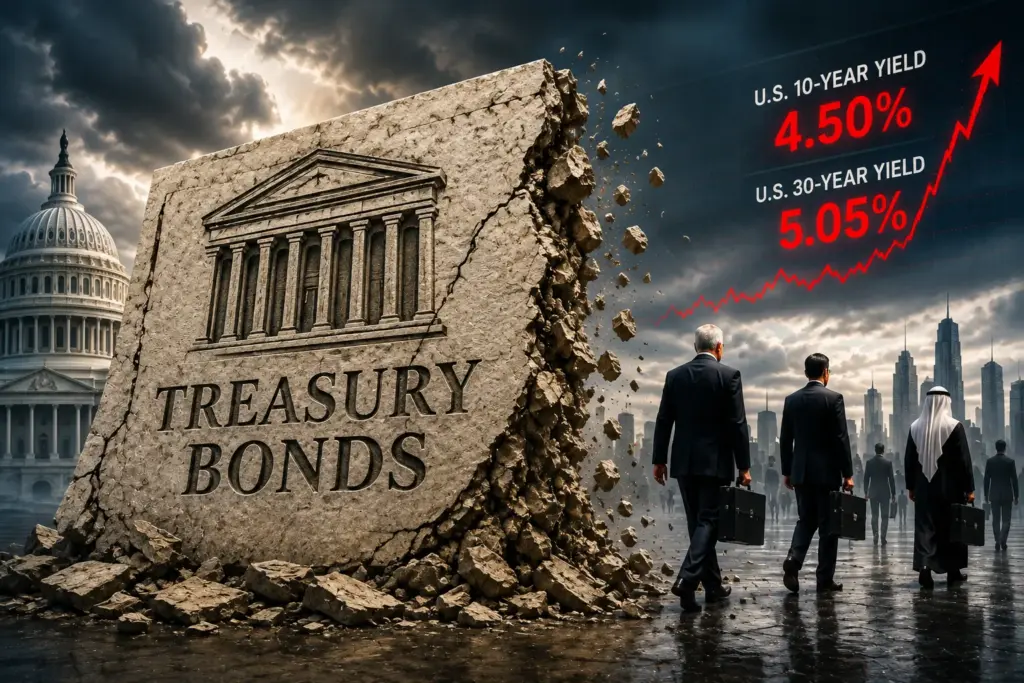
Most people tune out any headline with the word “bond” in it. That’s usually a reasonable instinct, bond markets are genuinely dry. This week is an exception worth paying attention to, because what’s happening in the bond market right now is already showing up in something a lot more people actually feel: the interest rate on their mortgage.
The yield on the 30-year US Treasury bond just hit its highest level since 2007, right as the total US national debt crossed $40 trillion for the first time. Neither number is abstract. Together, they’re a big part of why borrowing money, for a house, a car, or anything on a credit card, has been getting more expensive.
What a Bond Yield Actually Is
Skip the jargon for a second. When the US government needs money, it borrows it by selling bonds, essentially IOUs that promise to pay investors back over time with interest. The “yield” is just that interest rate, the return investors demand in exchange for lending the government their money for a set number of years, 10 or 30 being the most closely watched.
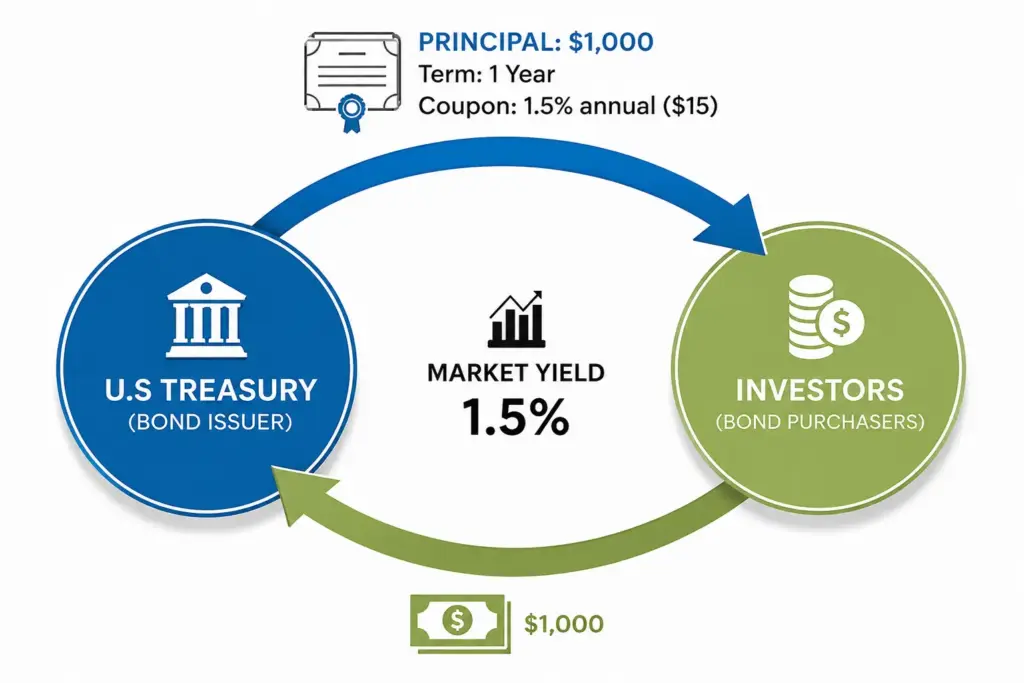
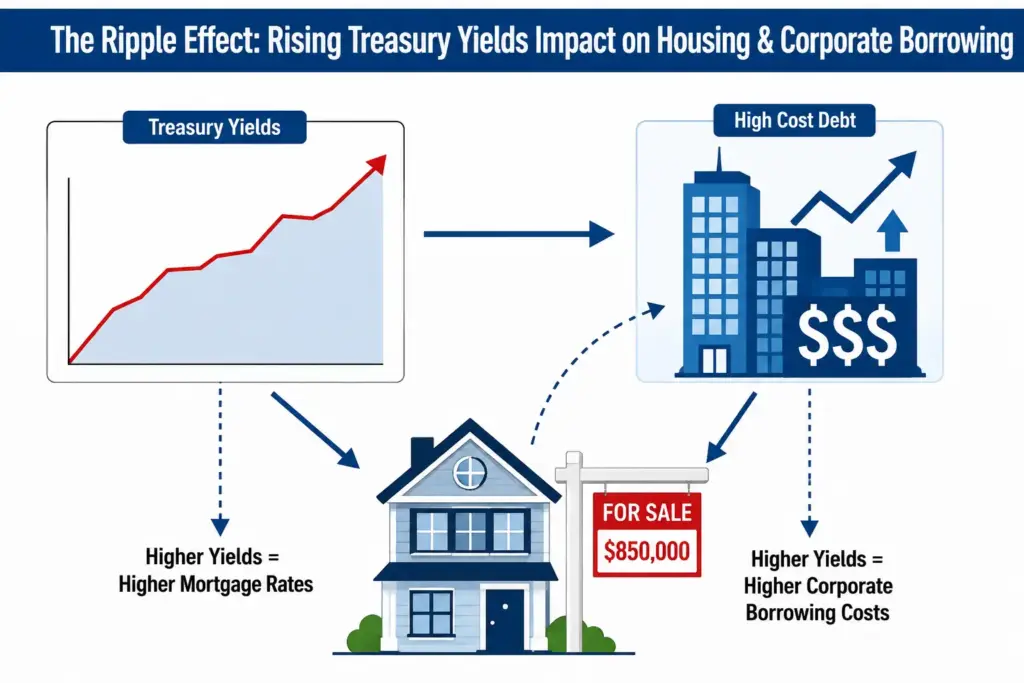
Here’s the part that actually matters for your own finances: Treasury yields function as a baseline for a huge range of other borrowing costs across the entire economy. Banks and lenders use them as a reference point when setting rates for mortgages, auto loans, and business borrowing. When the government has to pay more to borrow, that higher cost tends to ripple outward into what everyone else pays to borrow too.
Why Yields Are Climbing Right Now
A few things are converging at once, and none of them are new exactly, but they’re compounding.
The most direct trigger is the debt itself. The national debt has been growing by roughly $2 trillion a year, and crossing the $40 trillion mark this week wasn’t a surprise so much as a milestone investors had been watching approach. More government debt generally means more bonds need to be sold to cover it, and more supply tends to push yields higher as investors demand more compensation to keep absorbing it.
Inflation is adding pressure from a second direction. Consumer prices are still running above the Federal Reserve’s 2% target, and oil prices have stayed elevated for months now, driven largely by the ongoing conflict between the US and Iran, which continues to feed into broader inflation expectations. Higher expected inflation generally pushes bond yields up too, since investors want a return that outpaces the rate their money is actually losing value.
There’s a third factor that’s newer, and it’s tied directly to the AI boom. Tech companies have been issuing enormous volumes of corporate bonds to fund data center construction, competing directly with the US government for the same pool of investor capital. Some of those companies, like Microsoft, even carry credit ratings as strong as the US government’s own. That competition for capital adds yet another source of upward pressure on yields across the board.
The Treasury Actually Tried to Intervene, and It Barely Worked
This week offered a fairly rare, direct look at how seriously officials are taking this. Treasury Secretary Scott Bessent announced the department would at least double its buyback program for longer-dated bonds, essentially the government stepping in to buy back some of its own debt to ease pressure on yields.
It worked for about a day. Yields dropped modestly on the announcement, then climbed right back the following day, erasing most of the relief. That reversal is itself a meaningful signal: it suggests investors don’t see a buyback program as a real fix for the underlying issues, large deficits, persistent inflation, and heavy borrowing needs, driving yields higher in the first place.
Why This Actually Matters to You, Not Just Wall Street
The clearest, most direct place this shows up is mortgages. The average rate on a 30-year fixed mortgage climbed to nearly its highest level in a year alongside this move in Treasury yields, and mortgage rates track the bond market closely, though not perfectly. If you’re house hunting or considering refinancing, this is the mechanism behind why rates haven’t been cooperating.
It doesn’t stop at mortgages. Auto loans, credit card interest, and business borrowing costs all tend to move in the same direction as Treasury yields over time, since lenders use government borrowing costs as a reference point for pricing their own risk. And there’s a government-level consequence too: the US is now paying roughly $3 billion a day in interest on its debt, making interest payments the second-largest item in the federal budget, trailing only Social Security. That’s money that isn’t available for anything else, regardless of which programs a given administration might otherwise prioritize.
What to Actually Watch From Here
Nobody has a reliable crystal ball on exactly where yields go next, and it’s worth being skeptical of anyone who claims otherwise. What’s worth watching instead are the specific pressures driving this: whether the federal deficit trajectory changes at all, whether inflation data cools meaningfully in the months ahead, and whether AI-related corporate borrowing keeps competing as heavily for investor capital as it has been.
For anyone with a major borrowing decision on the horizon, a mortgage, a car loan, refinancing existing debt, this is the kind of environment where locking in a rate sooner rather than later has genuinely mattered, given how much movement there’s already been this year. This isn’t personalized financial advice, and it’s worth talking to a financial professional about timing any major borrowing decision, but understanding why rates are moving the way they are is a reasonable first step before making that call.

