
Daisy Kelly started her business because she couldn’t stop pulling out her own eyelashes. During the pandemic, with beauty salons shut, she mixed up a serum in her mother’s kitchen to help her lashes grow back. Five years later, that kitchen-table experiment brings in £6 million a year, and a big chunk of that now comes from something that barely existed as a serious sales channel a few years ago: shopping live, on camera, while people watch.
One twelve-hour TikTok livestream alone brought in more than £100,000 for her brand, Glow For It. “It’s categorically changed the trajectory of my business,” she says.
Stories like hers used to sound like outliers. They’re becoming the norm.
What Live Shopping Actually Looks Like
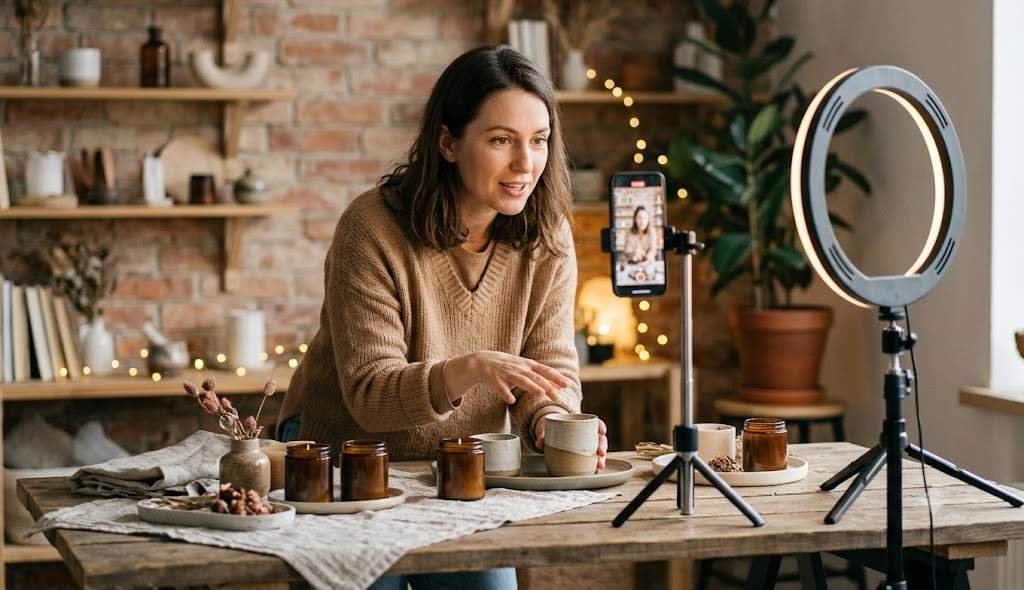
If you haven’t watched one of these streams, the format is simpler than it sounds. A host, sometimes the founder, sometimes a hired presenter, sits in front of a camera for hours at a stretch, showing off products, answering questions typed in by viewers in real time, and running limited-time deals that create genuine urgency to buy right now instead of later.
Daisy’s brand now streams from a dedicated studio for a minimum of six hours a day. “It’s like having 500 people in your shop,” is how she describes the effect.
It’s not just beauty brands either. Manny Malik runs a halal butcher shop in Wolverhampton, England, and started streaming with nothing more than a smartphone, a lighting kit, and a fridge full of meat. A three-hour livestream sold £8,000 worth of product, an amount that would normally take his shop three to four days to move. He’s now opening a second location, something he credits partly to what livestreaming unlocked for the business.
This Isn’t Staying Contained to the UK
It’s tempting to file this under “interesting British retail trend” and move on. That would be a mistake. TikTok Shop’s live shopping format is scaling fast in the US too, and the numbers are getting hard to ignore.
Live shopping now accounts for roughly a quarter of all TikTok Shop sales in the US, up from a much smaller share just two years ago, and it converts noticeably better than a normal scrolling feed post. Some data puts the average live shopping conversion rate at multiple times higher than standard TikTok ads. Total US social commerce sales, the category that live shopping sits inside, are projected to cross $100 billion in 2026, growing at a pace that’s outrunning traditional e-commerce by a wide margin.
Big platforms have noticed. Meta has been building out live shopping features on Instagram and Facebook, and Amazon has been investing in creator-driven commerce programs of its own, both clearly trying to capture a piece of what TikTok has already proven works.
Why This Format Actually Converts
Part of what makes live shopping different from a normal ad isn’t really about the product. It’s the format itself.
Catherine Shuttleworth, who runs a retail agency that surveys shopper behavior, says the appeal comes down to something viewers feel is missing from typical online shopping: real interaction. “It’s grown from nothing to a huge thing really quickly,” she says of the shift.
There’s also a psychological hook that researchers and retail analysts keep coming back to: scarcity. A significant share of younger shoppers, Gen Y and Gen Z specifically, say watching a product visibly sell out or go viral in real time makes them more likely to buy it, not less. Flash-sale style live streams with limited stock consistently convert better than any other livestream format, sometimes by a wide margin.
For sellers, that’s obviously appealing. For shoppers, it’s worth understanding exactly why that pull feels so strong.
The Part Worth Being Honest About
Not everyone watching this trend grow is cheering for it unconditionally.
Rebecca Lamb, who works in external relations for the free debt advice service Money Wellness, has flagged live shopping as a setup that makes overspending easier than it should be. She points to the same brain chemistry involved in gambling, the dopamine hit that comes from grabbing a deal before it disappears, combined with checkout flows that skip the usual friction of a shopping cart and a running total.
That combination, urgency plus one-tap payment, means it’s genuinely possible to spend more than you meant to before your brain has fully registered what happened. If you’ve ever found yourself checking out of a livestream deal faster than you’d normally decide on a purchase, that’s not an accident. It’s the format working exactly as designed.
None of that makes live shopping inherently bad, any more than any other retail format is inherently bad. It just means it’s worth watching a stream or two with a little awareness of what’s actually driving the urge to buy, rather than assuming the impulse is purely about the product.
What This Means Going Forward
There are real costs on the seller side too. TikTok Shop takes up to 9% commission on UK sales, and similar fee structures apply elsewhere, which eats into already thin margins for businesses like Manny’s butcher shop. He’s candid about it: the fees are significant, but the sales volume the platform unlocked simply didn’t exist for his business before.
That tradeoff, meaningful fees in exchange for access to an audience and format that didn’t really exist five years ago, is probably the most honest way to sum up where live shopping stands right now. It’s not a gimmick anymore. It’s quickly becoming a standard sales channel that both sellers and shoppers are going to keep running into, on both sides of the Atlantic.