
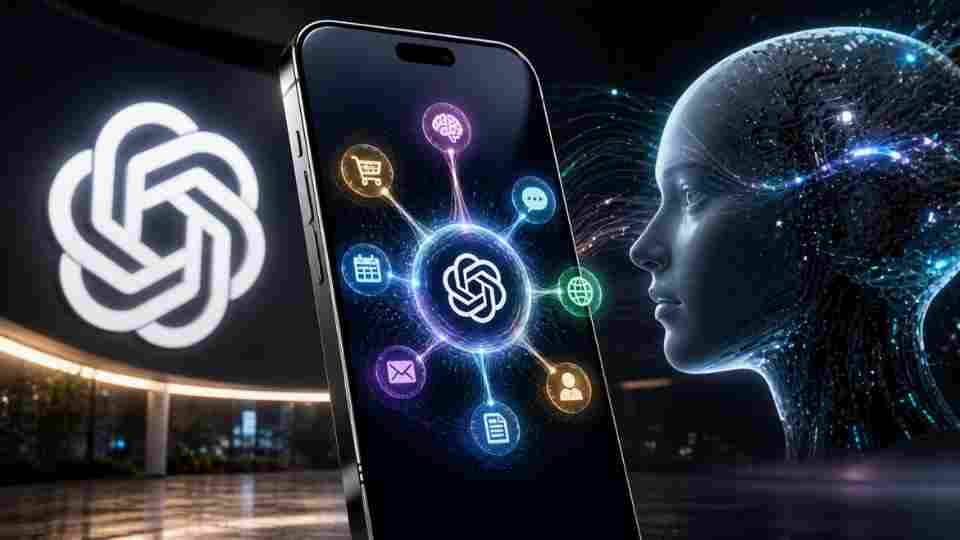
OpenAI is thinking about making a smartphone that uses intelligence. This phone could change the way people use their devices.
San Francisco. OpenAI may be getting ready to enter the hardware market with an idea: a smartphone that is powered by artificial intelligence. This could change how people use devices.
Key Partnerships Behind the Project
The company is working with chipmakers like MediaTek and Qualcomm to make this happen. Luxshare may also play a role in designing and making the phone.
Core Idea: Replacing Apps with AI Agents
The idea behind this phone is to replace mobile apps with artificial intelligence agents.
How It Works
- Users will not have to open apps for messaging or booking services
- Instead, they can use artificial intelligence agents to complete tasks automatically
- These agents will understand what the user wants, the context, and user preferences
Benefits
- More smooth experience
- Highly personalized interactions
Current Mobile Ecosystem Challenges
Now companies like Apple and Google control the mobile ecosystem.
How They Control It
- Through app stores
- Through system-level access
This limits how well third-party artificial intelligence tools can work with devices.
OpenAI’s Strategy
If OpenAI makes its own smartphone and hardware ecosystem, it can get around these limits.
What OpenAI Can Achieve
- Build a system where artificial intelligence is deeply embedded
- Control the entire user experience
- Integrate intelligence into daily life
Why OpenAI Is Moving Into Hardware
OpenAI is expanding beyond software platforms like ChatGPT.
Key Reasons
- ChatGPT is approaching one billion users
- Direct access to users
- Better control over user experience
- Deeper AI integration
Features of an AI-First Device
A device built for artificial intelligence can unlock features not available on traditional smartphones.
Capabilities
- Understand user context
- Track habits and preferences
- Predict user needs
- Offer real-time assistance
Example Use Case
Instead of opening multiple apps to plan a trip:
- An AI agent can book flights
- Organize schedules
- Execute tasks from a single command
Technology Behind the Device
The system will likely use:
- On-device intelligence models
- Cloud-based models
This combination will balance performance and efficiency.
Industry-Wide Shift Toward AI Interfaces
The idea of moving beyond apps is not limited to OpenAI.
At the SXSW event, Carl Pei said that traditional apps may eventually disappear as artificial intelligence becomes more capable.
Industry Trend
- AI-first interfaces replacing apps
- Shift from app-based ecosystems to intelligent systems
Development Timeline
The development timeline is not fully clear.
Expected Milestones
- Specifications finalized by end of the year or early 2027
- Mass production expected around 2028
This means the project is still in early stages.
Earlier Hardware Plans
Earlier in 2026, Chris Lehane said the company plans to launch hardware in the second half of 2026.
Initial Device Plans
- AI-powered earbuds were expected first
- Smartphone may be part of a long-term strategy
Potential Impact on the Mobile Industry
If OpenAI successfully builds this smartphone:
Major Changes
- Apps may become less important
- AI agents may handle most tasks
- User interaction may become more natural
Challenges and Concerns
This approach also raises important questions:
- Data privacy
- Control over user data
- Competition with existing ecosystems
Current Status
As of now, OpenAI has not officially confirmed these plans.
If reports are accurate, the company could challenge how smartphones are used today.
The Bigger Picture
The shift toward intelligence-native devices suggests a new future.
What This Means
- Less focus on apps and interfaces
- More focus on understanding users
- Devices that act proactively
Instead of navigating apps, users may simply interact with intelligent systems.
Conclusion
Whether OpenAI leads this change or not, one thing is clear:
👉 The next generation of smartphones may not work anything like the ones we use today.