
The UK doesn’t usually make global headlines for its weather being too dry. This summer is the exception.
England and Wales just recorded their driest July since records began in 1836, according to provisional Met Office figures. England saw just 6.5mm of rain the entire month, less than half the previous record low set in 1911. Wales fared similarly badly. The result: all of Wales and roughly half of England are now officially in drought, and more than 23 million people across England and Wales are living under hosepipe bans.
And now, as if the weather couldn’t get more contradictory, the same bone-dry summer is producing a real risk of flash flooding.
How a Drought Also Produces Flood Warnings
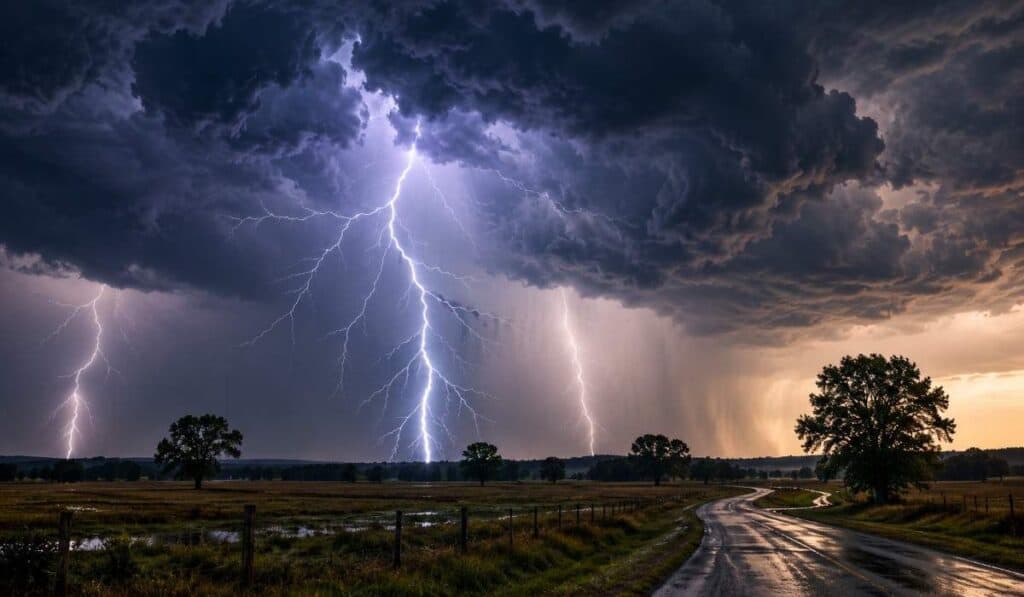
That combination sounds like a contradiction, but it’s actually a well-understood pattern. As a heatwave broke into Tuesday, a cold front moving through brought thunderstorms rather than steady rain, and the Met Office issued a yellow thunderstorm warning for parts of Northern Ireland, with up to 30mm of rain possible in just an hour or two, alongside strong winds and hail.
Ground that’s been baked dry for weeks doesn’t absorb sudden heavy rainfall the way normal soil does. Scorched, compacted earth sheds water rather than soaking it in, which means a short, intense downpour is more likely to pool and run off rapidly than a similar amount of rain falling on healthy, absorbent ground. The practical result is flash flood risk showing up in the exact same forecast as a drought that shows no sign of ending, a genuinely uncomfortable combination for emergency planners trying to prepare for both extremes in the same week.
The Numbers Behind the Drought
This isn’t a one-off dry spell. Some parts of the UK have gone weeks without any measurable rainfall at all, and the broader pattern has been building since spring. Southern England has been particularly hard hit, with some regions receiving as little as 1% of their average July rainfall.
The consequences are already showing up well beyond gardens and lawns. Farmers have reported the harvest coming in early and warned of poor crop yields, with some already feeding livestock winter feed months ahead of schedule because pasture has dried out. Rivers and reservoirs are running low enough that multiple water companies have imposed restrictions, with more expected to follow if August doesn’t bring meaningful rain.
Why Hosepipe Bans Keep Expanding
A hosepipe ban is a fairly blunt tool: it prohibits non-essential water use, watering gardens, washing cars, filling paddling pools or private pools, in an effort to reduce demand while reservoirs and rivers recover. The current round of restrictions already covers more than 23 million people, and water companies have been explicit that the driving factor isn’t just this one dry month. Several have pointed to a longer pattern of below-average rainfall stretching back most of the past year, meaning July’s record dryness pushed already-strained water levels past a threshold companies felt required action.
Breaking a hosepipe ban isn’t just a suggestion either. Penalties can run into four figures for repeat or serious violations, a level of enforcement that signals how seriously water companies are treating supply concerns this year.
Is Relief Coming?
Not really, and not soon. Forecast models suggest August is likely to continue the same pattern: below-average rainfall and above-average temperatures across much of the UK. That makes it unlikely any of the current hosepipe bans get lifted in the near term.
Wisley in Surrey has become something of a symbol of just how extreme this has been, recording 47 consecutive days without measurable rainfall at one point this summer. Forecasters do expect the intensity of any future heat spikes to ease somewhat as August progresses and the sun’s angle lowers, but they’re also clear that spells of heat reaching 30C or higher wouldn’t be unusual even into September.
Why a UK Drought Story Is Worth Paying Attention To
Weather extremes like this tend to get treated as isolated, local news, hot summer, dry ground, inconvenient for gardeners. The scale of this one pushes it past that framing. A weather record that’s held since 1836 breaking in a single month is a genuinely significant data point, not just a mild inconvenience, and the knock-on effects, strained agriculture, water infrastructure under real pressure, tens of millions of people under formal restrictions, are the kind of practical, everyday impact that reaches well beyond anyone directly affected by this particular summer.
Whether this ends up as a one-year anomaly or part of a longer pattern is the bigger question hanging over all of it, and it’s one meteorologists and water companies alike are watching closely heading into the back half of the year.