

This isn’t personalized financial advice, and specific card offers, rates, and terms change often — always confirm current details directly with the issuer before applying.
Roughly 68% of American adults carry a credit card that earns travel rewards, according to a recent NerdWallet study. That’s a huge number of people chasing the same basic promise: spend money you were going to spend anyway, and get a free flight or hotel stay out of it eventually. The promise is real. Whether it’s actually the right move for you depends on math a lot of people never sit down and do.
How These Cards Actually Earn You Something
Every purchase on a travel rewards card earns points or miles, usually at a base rate, with higher multipliers in specific categories like dining, travel, or groceries. A card might earn 1 point per dollar on everything, but 3 points per dollar specifically on travel and dining purchases, which matters a lot if that’s where your spending is already concentrated.
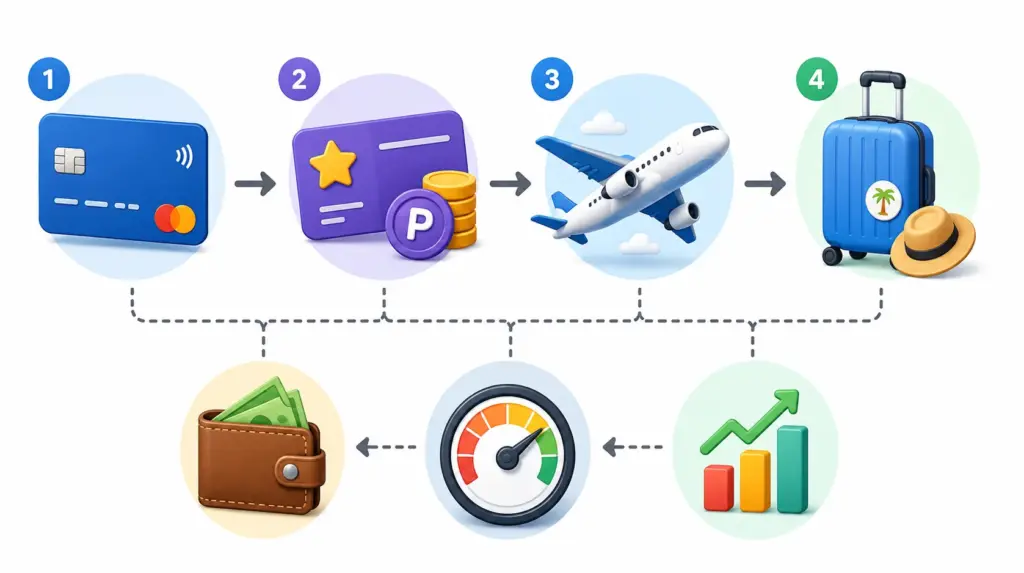
Most cards also come with a sign-up bonus, often the single biggest chunk of value you’ll get from the card in its first year. Bonuses in the range of 60,000 to 100,000+ points after hitting a minimum spending requirement in the first few months are common right now, and depending on how you redeem them, that alone can be worth anywhere from $600 to well over $1,500.
Not All Points Are Worth the Same Amount
This is the part that trips up a lot of beginners, and it’s genuinely the most important concept to understand before picking a card. Points and miles come in three different flavors, and they’re not interchangeable in value.
Flexible transferable points, things like Chase Ultimate Rewards, Amex Membership Rewards, or Capital One Miles, are generally the most valuable because they can move to multiple different airline and hotel partners, or get redeemed as straightforward cash back at a fixed rate, typically around 1 to 1.5 cents per point. The flexibility is the value.
Airline miles, tied to one specific airline’s program, are less flexible but can occasionally deliver outsized value, particularly on premium cabin, international business-class redemptions that would cost thousands of dollars in cash.
Hotel points work similarly, tied to one hotel chain, with value that varies significantly depending on which specific property you’re redeeming at.
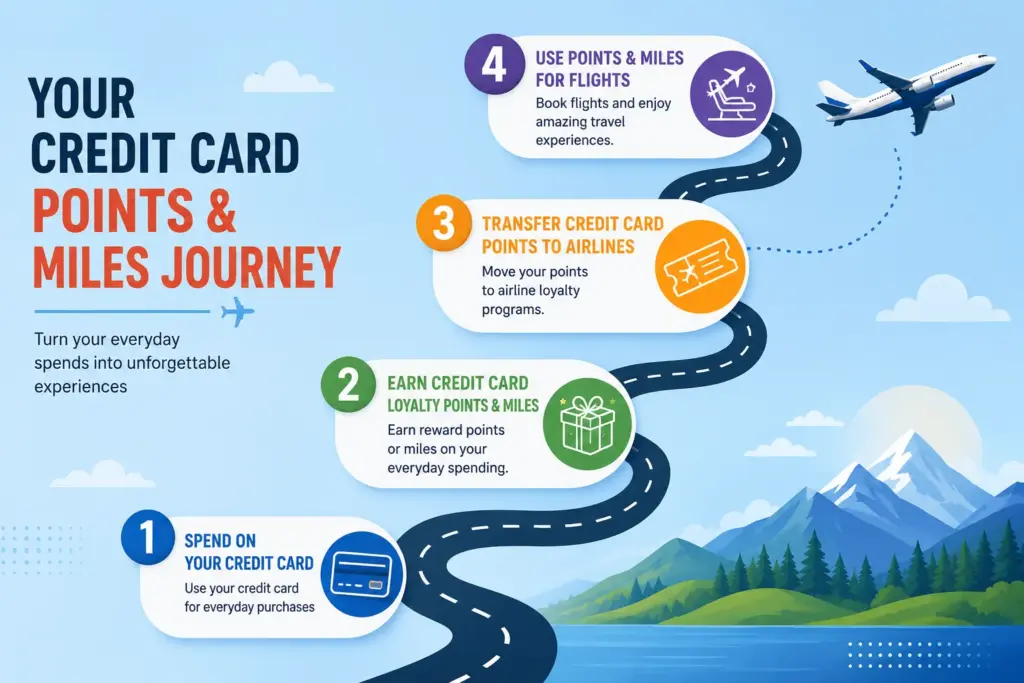
The practical takeaway: the same 60,000 points might be worth a flat $600 redeemed as cash back, or worth $1,500 or more if transferred to the right airline partner for the right flight. Redemption strategy, not just the earning rate, is where a lot of the real value either shows up or gets left on the table.
The Math That Actually Determines Whether It’s Worth It
Here’s a comparison worth sitting with before applying for anything. A travel card with a $95 annual fee needs to deliver more than $95 in value, sign-up bonus plus ongoing earning, minus the fee, to be worth carrying past the first year. For someone who travels two to four times a year and already spends normally on dining and everyday purchases, that bar is usually easy to clear. For someone who travels rarely and would need to change their spending habits just to hit a sign-up bonus threshold, it often isn’t.
There’s also a meaningful tier above that: premium travel cards with annual fees running $395, $550, sometimes higher, that bundle in airport lounge access, annual travel credits, and elevated earning rates. These can deliver genuinely strong value, some analyses put it at $1,500 to $3,000 or more annually, but only for people who actually use the lounge access and travel credits regularly. A premium card’s perks sitting unused is an expensive way to carry a piece of plastic.

The Trap That Applies Here Just Like Any Rewards Card
The same warning that applies to cashback cards applies here, arguably even more so, because travel cards often carry higher ongoing interest rates than basic cashback cards. None of the point-earning math matters if you’re carrying a balance. A flight worth $600 in redeemed points is a bad trade if you paid $700 in interest charges to get there. Travel rewards cards make the most sense specifically for people who already pay their statement in full every month and are looking for a return on money they were spending regardless.

Other Details Worth Checking
Foreign transaction fees matter enormously for a travel card specifically, since the entire point is often spending internationally. Confirm a card has no foreign transaction fee before relying on it for a trip abroad, most dedicated travel cards do, but it’s not universal.
Sign-up bonus spending requirements are worth being honest with yourself about. A bonus requiring $4,000 in spending over three months is a reasonable target for someone with typical monthly expenses. It’s a bad idea to spend more than you normally would, or put necessary expenses on a higher-interest card, purely to chase a bonus threshold.
Annual travel credits, a common perk on premium cards, are only valuable if they match something you’d actually book anyway. A $300 annual hotel credit is worth exactly $300 to someone who books hotels regularly, and worth considerably less to someone who has to search for a way to use it before it expires.
Who These Cards Actually Make Sense For
If you travel a few times a year, already spend normally on dining and everyday purchases, and reliably pay your balance in full, a mid-tier travel card with a reasonable annual fee is a fairly straightforward way to turn spending you were doing anyway into meaningfully discounted or free travel.
If you travel rarely, or you’re not confident you’d pay the balance in full every month, a travel card’s added complexity and higher interest rates make it a worse fit than a simple, no-annual-fee cashback card. The best rewards program in the world doesn’t outweigh the cost of carrying a balance on it.
The Bottom Line
Travel rewards cards can deliver real, substantial value, genuinely worth $1,500 or more a year for the right traveler, but the value depends heavily on redemption strategy, not just which card has the flashiest sign-up bonus. Understanding the difference between flexible points, airline miles, and hotel points, and being honest about whether you’ll actually use a card’s specific perks, matters more than chasing whichever bonus number looks biggest in an ad.

