
The US Senate advanced a bill this week that’s been years in the making, cleared with a rare bipartisan vote, and could reshape how the US trades with two of the world’s largest economies. It’s named after a senator who died just weeks before seeing it pass.
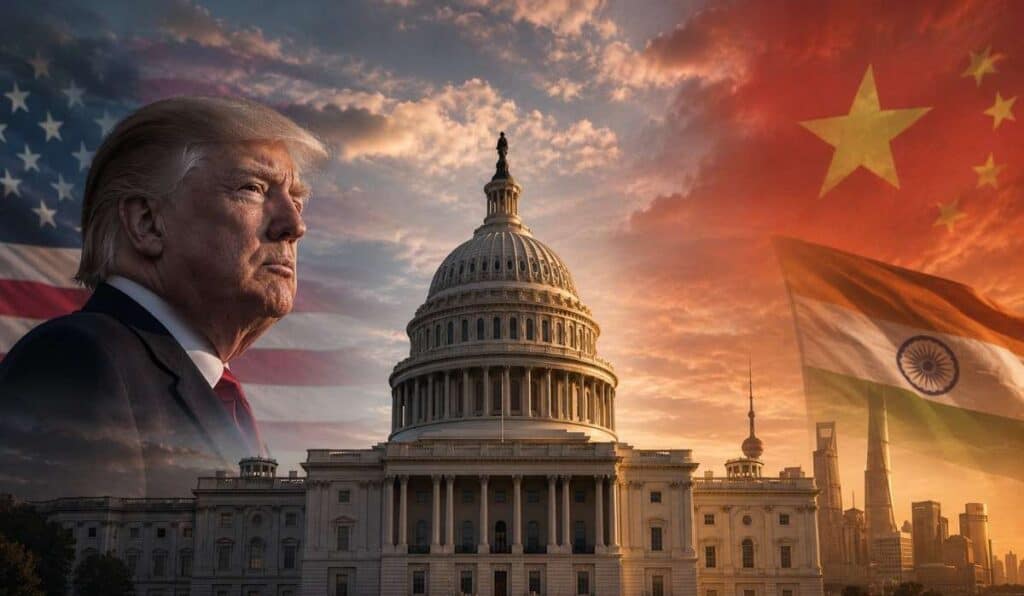
The Sanctioning Russia and Iran Act of 2026, informally named after the late Senator Lindsey Graham, cleared the Senate 86 to 12, comfortably past the 60-vote threshold needed to move forward. At its core, the bill gives President Trump authority to impose tariffs of up to 100% on goods from countries that are major purchasers of Russian oil and natural gas, a list currently topped by China and India.
What the Bill Actually Does
Strip away the politics for a moment and the mechanics are fairly direct. The bill imposes mandatory sanctions on Russian officials, oligarchs, state-owned enterprises, and the so-called shadow fleet of tankers Russia has used to keep exporting oil despite existing restrictions. Beyond sanctions, it authorizes tariffs of up to 100% specifically targeting the five largest buyers of Russian crude oil and the five largest buyers of Russian natural gas, categories that currently include China, India, and a handful of other countries.
There’s a built-in exception worth noting: countries that import less than 15% of their natural gas from Russia, and are actively working to reduce that further, would be exempted. That carve-out appears designed specifically to avoid hitting European allies who’ve been gradually weaning off Russian energy since the war in Ukraine began, while still applying maximum pressure on the largest, least-reduced buyers.
The bill also extends existing sanctions targeting Iran’s energy and weapons sectors, a provision reportedly added at the Trump administration’s request, and includes a mechanism requiring Congress to review the list of targeted countries every 180 days.
Why This Bill, and Why Now
The legislation’s path to passage is tangled up with personal tragedy. Senator Lindsey Graham spent more than a year building bipartisan support for it, reportedly finalized a compromise version with the White House just before his sudden death earlier this month, and the Senate vote came just hours after his memorial service, with Ukrainian President Volodymyr Zelensky reportedly present in the chamber as senators cast their votes.
The underlying goal, according to supporters, is straightforward: China and India together account for an estimated 70% of Russia’s energy export revenue. Sanctioning Russia directly hasn’t cut off that money, since Russia has kept finding buyers willing to purchase discounted oil despite the war. This bill’s approach is different, it aims at the buyers rather than just the seller, betting that the threat of losing access to US markets is a bigger deterrent than sanctions on Russia alone have been.
Senate Armed Services Chairman Roger Wicker, a Republican, framed the bill as targeting Putin’s inner circle and the infrastructure used to evade existing sanctions. Democratic Senator Richard Blumenthal, a longtime co-sponsor, has framed the tariff provisions as narrowly tailored specifically to prevent the president from using them as a tool for sweeping, unrelated trade action.
The Pushback Worth Understanding
Not every senator who voted for the bill is fully comfortable with what it authorizes, and the concerns worth flagging are less about the bill’s goal and more about its mechanism.
Some Democrats who ultimately supported the bill have raised concerns that handing the president authority to impose tariffs this large, even for a stated foreign policy purpose, concentrates significant economic power in the executive branch. There are also practical worries about the tariffs themselves: a 100% tariff on goods from major economies like India and China would likely raise costs for American businesses and consumers who rely on imports from those countries, separate from whatever pressure it puts on Russia. Some lawmakers have also flagged that steep tariffs risk complicating relationships with allies and trading partners beyond just the two countries most directly targeted.
What Happens Next
Passing the Senate is a meaningful milestone, but it’s not the finish line. The bill still needs approval from the House of Representatives before it can reach the president’s desk, and the House has already left Washington for its summer recess, meaning the earliest realistic window for a vote is September.
That timeline matters. It leaves months for the bill’s provisions, and the diplomatic and economic pressure they’re designed to apply, to remain theoretical rather than active. It also gives India, China, and other affected countries time to potentially adjust their energy purchasing before any tariffs would actually take effect, if the bill clears the House and gets signed into law at all.
Why This Connects to a Bigger Pattern
This bill lands in the middle of an already turbulent year for US tariff policy. The Trump administration’s use of tariffs as a foreign policy tool has already faced legal challenges this year, including a Supreme Court ruling in February that struck down an earlier, broad set of tariffs, and fresh lawsuits filed just this week against a separate round of sweeping trade measures.
What makes this bill different is that it isn’t the administration unilaterally imposing tariffs under a disputed legal authority. It’s Congress explicitly authorizing the tariff power through legislation, which is a structurally different, and likely more legally durable, path than the executive actions that have run into court challenges throughout the year. Whether that distinction ends up mattering much in practice depends entirely on what happens once the House returns in September.