
This article discusses specific publicly traded companies for informational purposes. It is not a recommendation to buy or sell any security.
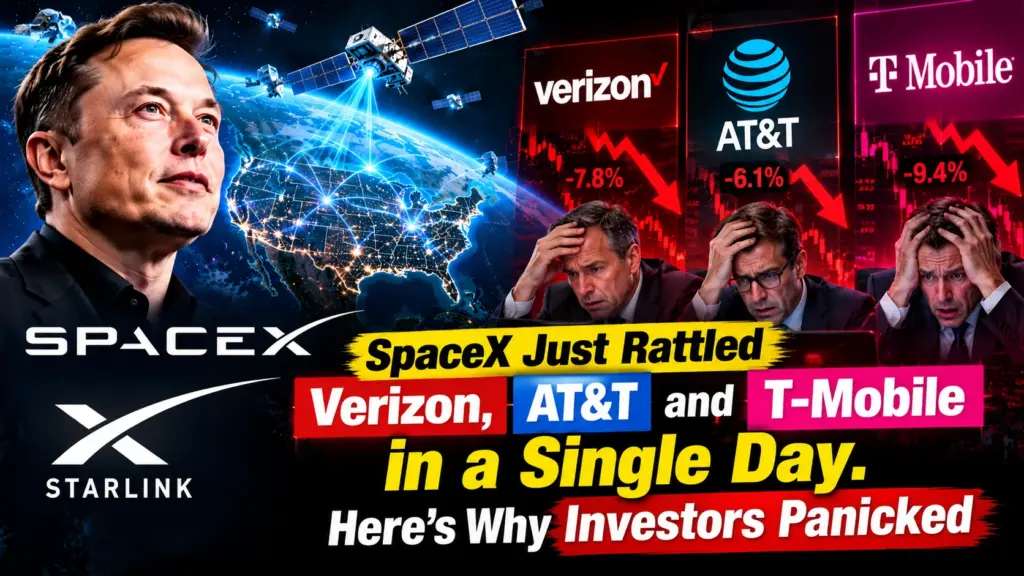
On Thursday, SpaceX put out a fairly technical-sounding press statement about buying radio spectrum. By Friday’s market close, three of the biggest companies in American telecom had suffered some of the worst trading days in their modern history.
Verizon fell 8.75%, its worst single day since July 2002. T-Mobile dropped 13.27%, and AT&T lost 9.81%, its sharpest decline since 2000. SpaceX’s own stock barely moved, up about 1%. That asymmetry says a lot: investors weren’t reacting to anything SpaceX had built yet. They were reacting to what it might build.
What SpaceX Actually Bought
The deal itself is narrower than the market reaction suggests. SpaceX agreed to acquire a nationwide portfolio of spectrum licenses from Grain Management, up to 14 megahertz of paired spectrum in the 800 MHz band, according to its own statement.
Spectrum is simply the slice of radio airwaves that wireless carriers use to send signals to your phone, and it’s a scarce, tightly regulated resource. The 800 MHz band is considered “low-band” spectrum, which matters because lower frequencies travel farther and penetrate walls better than higher ones. That’s exactly what you’d want if you were trying to give a phone reliable coverage across a large country without building a tower every few blocks.
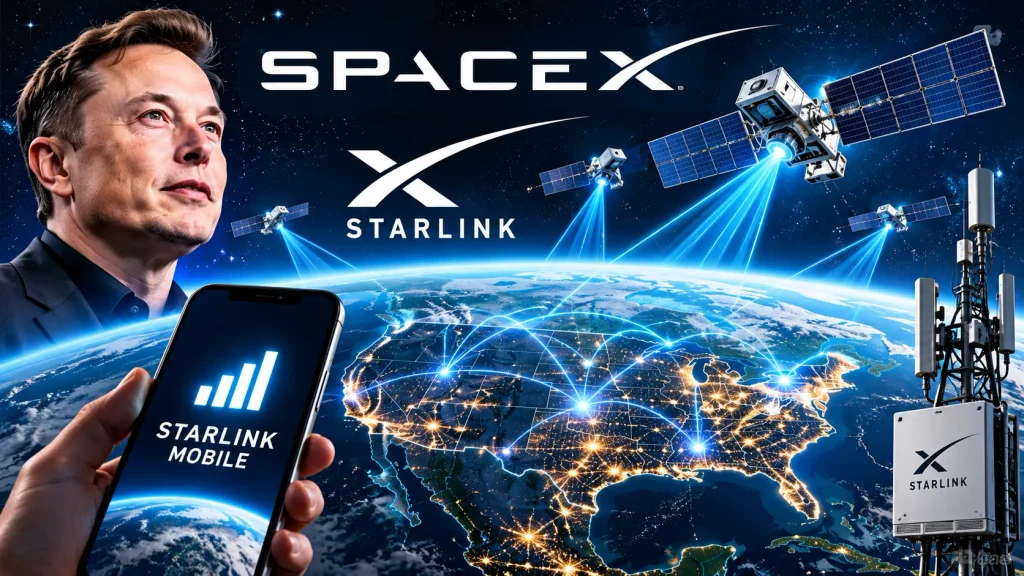
SpaceX says it plans to use the spectrum to expand Starlink, its satellite internet service, into a mobile network combining satellite coverage with ground-based infrastructure. The Federal Communications Commission still has to approve the transaction, and FCC Chair Brendan Carr was publicly supportive, saying more competition in the spectrum market is good for consumers and that more than $100 billion of spectrum could come to market over the next two years.
Why the Stocks Fell So Hard Over a Deal That Hasn’t Built Anything
Here’s the logic behind the panic. For years, the US wireless market has functioned as a stable three-player competition: Verizon, AT&T, and T-Mobile, each spending enormous sums on towers and networks that new competitors would find nearly impossible to replicate. That barrier to entry is a big part of why these companies have been valued the way they have, as reliable, cash-generating utilities of the digital age.
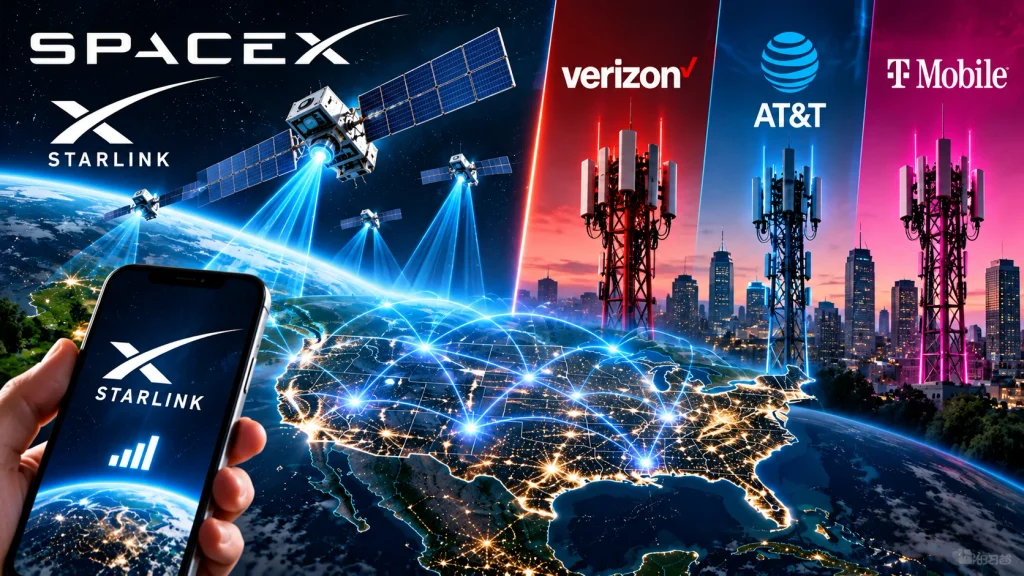
A well-funded new entrant with its own satellite constellation and now its own spectrum threatens the assumption that the market stays a comfortable three-way split forever. Analysts at Evercore ISI wrote that SpaceX “now has the outline of a real network,” a phrase that likely captured how a lot of investors suddenly viewed it. T-Mobile took the hardest hit partly because it had been seen as SpaceX’s closest potential partner for getting into conventional wireless service, and owning independent spectrum makes a future built entirely around a carrier partnership less certain.
The Skeptics Have a Point, Though
Not everyone thinks the selloff was proportionate, and the carriers themselves were quick to push back.
Verizon said in a statement that buying spectrum alone doesn’t provide the network or infrastructure needed to offer real nationwide coverage, describing spectrum without a network as essentially empty airwaves. T-Mobile’s president of technology made a similar point publicly, noting that you can acquire spectrum in a single transaction, but you can’t acquire a nationwide, high-performing wireless network overnight.
Wall Street analysts echoed the practical objections. JPMorgan noted that without a deal with an existing carrier, SpaceX would likely need to build a ground-based network using macro towers to match what traditional carriers deliver today. UBS flagged a more physical limitation: radio signals from satellites often struggle to reach the interior of buildings, which is where a huge share of mobile usage actually happens. Several firms described the competitive threat as real but slow-moving, a matter of years rather than quarters.
There’s also a telling detail in the timing. The three major carriers had recently announced a joint venture aimed at eliminating coverage dead zones and expanding satellite coverage, and that announcement made no mention of SpaceX or Starlink at all, suggesting the incumbents are already trying to build their own answer to the same problem.
What This Could Mean for Your Phone Bill
For regular consumers, none of this changes your coverage or your monthly price tomorrow. Spectrum deals take regulatory approval, and building a network takes years.
What’s worth watching is the longer-term shape of competition. If SpaceX does eventually become a fourth serious national carrier, history suggests more competition tends to push prices down or push incumbents to improve their offerings, which is the argument regulators like Carr are making. If instead the plan stalls or ends in a partnership with an existing carrier, the market structure largely stays as it is today.
Either outcome is plausible, and anyone claiming certainty right now is guessing. What we do know is that a company best known for rockets and satellite internet just made a move that a $100-plus billion corner of the stock market treated as a serious threat, before it had built a single new tower.
A Pattern Worth Noticing
This is also the latest in a string of stories showing how far SpaceX’s ambitions have stretched since its record IPO this summer. We’ve covered its AI computing talks with the Pentagon, and the ongoing speculation about a possible merger with Tesla. A wireless carrier push adds yet another business line to a company that started out launching rockets.
Whether all of those ambitions succeed is a very different question from whether investors believe they might, and Friday’s selloff was a vivid example of how much weight the market now gives that second question. As always with a story like this, it’s worth separating what has actually been built from what has merely been announced, and being honest about which one is currently moving stock prices.