
Most people have never heard of an optical transceiver, and there’s no real reason they should have. It’s a small component buried inside data centers, quietly doing its job. This week, it became the center of a proposed US trade restriction significant enough to move stock prices before the rule has even been formally written.
The Trump administration is drafting a ban on US imports of new Chinese-made optical transceivers, according to Reuters, with the Federal Communications Commission working on the measure and hoping to publish it before the end of 2026. The stated goal is straightforward: protect the physical infrastructure powering America’s AI buildout from a category of hardware officials worry could be used for espionage or disruption.
What This Tiny Part Actually Does
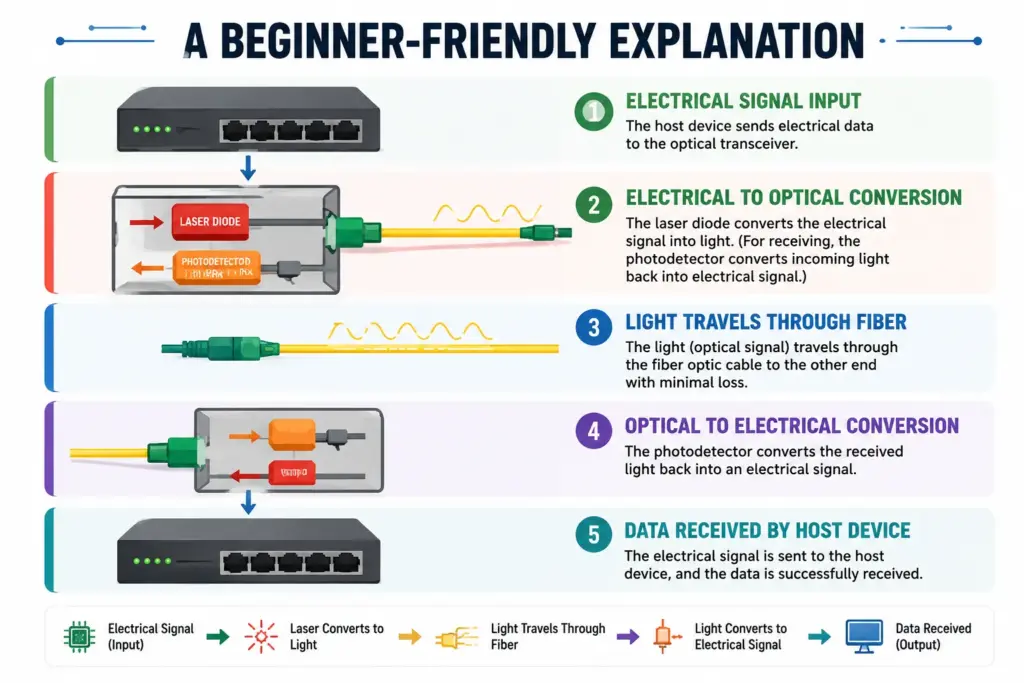
An optical transceiver converts electrical signals into light and back again, letting data move through fiber-optic cables at extremely high speed inside a data center. It’s not a chip that trains an AI model or a processor doing calculations. It’s closer to plumbing, unglamorous, invisible when it’s working, but essential to moving enormous volumes of data between servers fast enough to keep an AI data center actually functional.
That “just plumbing” quality is exactly what makes the security concern real rather than theoretical. A compromised component sitting deep inside a data center’s networking layer, exactly where enormous amounts of sensitive data physically pass through, is a meaningfully different risk than a compromised component in a less central part of the system. Officials cited concerns about data theft, malware installation, and potential service disruption as the reasoning behind the proposed rule.
This Isn’t Actually a New Playbook
If this sounds like a pattern rather than an isolated move, that’s because it is. The FCC has been building out what’s called a “Covered List,” a mechanism created by Congress to bar foreign equipment posing national security risks, and has already used it to restrict Chinese-made drones, routers, and power inverters over the past year, with a ban on certain Chinese robots following more recently.
Optical transceivers are simply the newest category added to that same enforcement approach, specifically aimed at the infrastructure layer supporting AI rather than consumer-facing hardware. Worth noting: a broader Commerce Department effort targeting Chinese data center equipment was reportedly shelved back in February following a trade détente with Beijing. The FCC picking this specific fight back up suggests the underlying concern didn’t go away, even when the diplomatic temperature cooled temporarily.
Who Actually Wins and Loses Here
The market reaction has already been significant, and it maps onto the proposal’s structure fairly cleanly. Zhongji Innolight, a Chinese manufacturer holding roughly 27% of the global optical transceiver market, would be directly affected, since the rule specifically targets new imports of Chinese-made models.
US-based alternatives have moved sharply in the opposite direction. When Reuters’ report first broke, Coherent shares jumped about 11%, Applied Optoelectronics surged roughly 18%, and Lumentum gained around 7%, while Zhongji Innolight’s Shenzhen-listed shares fell as much as 14% before paring losses. That’s not a minor market shrug, it’s the kind of same-day move that reflects investors treating a draft proposal as a genuine, tradeable signal rather than background noise. For cloud infrastructure giants like Amazon Web Services that currently rely on a global supply chain including Chinese components, a ban like this would likely mean a forced transition toward domestic or allied suppliers, which typically comes with higher costs, at least in the near term while supply adjusts.
There’s additional context worth knowing about Zhongji Innolight specifically: the company was added to the Pentagon’s list of Chinese military-backed companies back in June, months before this proposal became public, suggesting the security concern here didn’t emerge overnight.
There’s additional context worth knowing about Zhongji Innolight specifically: the company was added to the Pentagon’s list of Chinese military-backed companies back in June, months before this proposal became public, suggesting the security concern here didn’t emerge overnight.
The Contradiction Nobody’s Fully Resolved Yet
Here’s the part of this story that’s gotten more attention as it’s developed: the plan to reduce dependence on China runs directly into a different Chinese dependency underneath it.
Zhongji Innolight and a second Chinese manufacturer, Eoptolink, together control more than 60% of the market for the highest-bandwidth transceivers used in the newest AI data centers. Replacing that volume isn’t something Coherent and Lumentum can do overnight. Industry analysts estimate a realistic ramp-up window of 12 to 24 months before Western manufacturers could scale to meaningfully cover that gap.
Worse, the material those Western replacements actually need, indium phosphide, the substrate used to manufacture competing transceivers, is itself subject to Chinese export licensing controls that already pushed its price up roughly 250% during 2025. In other words, the plan to reduce reliance on Chinese-made components depends partly on a raw material China also has significant leverage over. If Beijing tightens those export controls further in response to the FCC’s move, the intended American winners could end up constrained by the exact same supply chain risk the policy was designed to escape.
Chinese officials have already signaled they’re watching closely, with statements indicating a response would follow if the restriction moves forward. Some analysts have floated a middle path as a way through this bind: rather than banning all Chinese-made transceivers immediately, the FCC could restrict only the newest next-generation modules, giving Western suppliers more runway to scale before older, already-deployed Chinese hardware needs replacing.
Why This Connects to a Much Bigger Story
This proposal isn’t happening in isolation. It’s landing in the middle of a year already defined by escalating US-China tension over the infrastructure underpinning AI specifically, not just the chips getting most of the public attention.
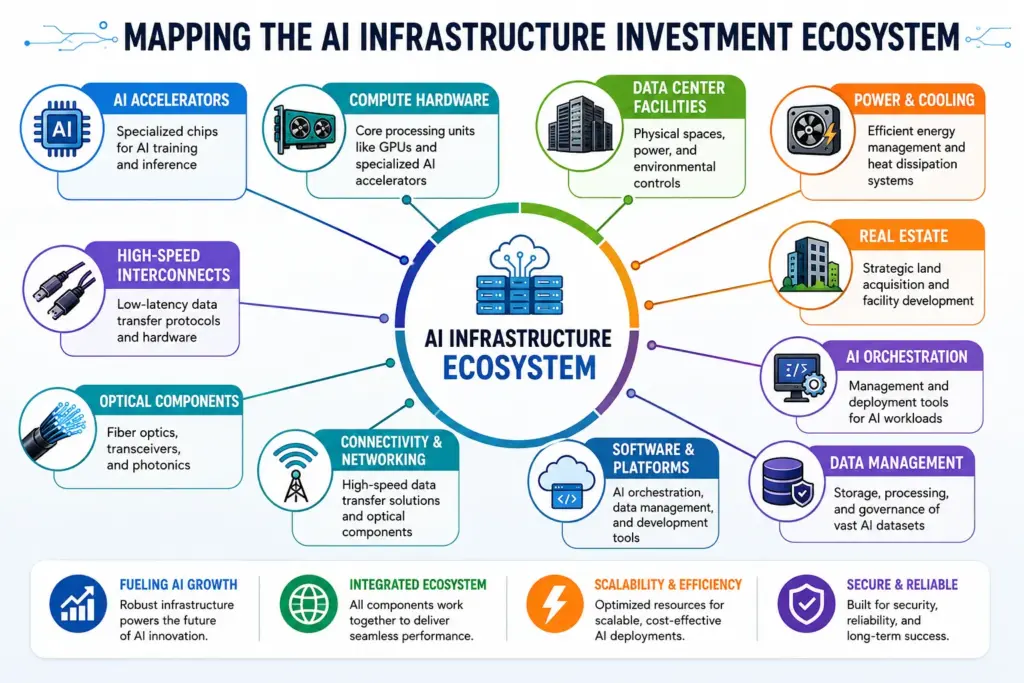
It also connects directly to a theme we’ve covered before: companies like Microsoft and Wipro have spent this year pouring enormous resources into helping enterprises actually deploy AI at scale, a trend built on the assumption that the underlying infrastructure, data centers, networking, the physical layer beneath the software, is trustworthy and available at reasonable cost. A restriction like this one is a reminder that infrastructure trust and infrastructure cost aren’t separate conversations from the AI story dominating headlines. They’re the actual foundation it’s being built on, and Washington is treating that foundation as a genuine national security question, not just a supply chain footnote.
What Happens Next
Nothing here is finalized. The FCC could still modify or shelve the proposal entirely, and sources cautioned the rule remains in draft form. The administration is reportedly planning to ban new imports specifically, while exempting many non-Chinese suppliers already in the market, which suggests the goal is steering future purchasing rather than ripping out equipment already installed and running.
For anyone watching AI infrastructure spending as an economic indicator, and this connects directly to the broader story of AI investment currently carrying a significant share of US GDP growth, a rule like this is worth tracking less for the specific component involved and more for what it signals: the next phase of US-China tech competition looks less like a fight over the flashiest AI models, and increasingly like a fight over the unglamorous physical infrastructure most people will never think about, until a rule like this one makes them.

