
China’s government just admitted something it doesn’t admit often: growth isn’t going the way it planned, and it’s about to spend its way out of the problem.
The country’s economy expanded 4.3% in the second quarter of 2026, its slowest pace since the tail end of 2022 and short of Beijing’s own 4.5% to 5% annual target. In response, the country’s cabinet held a meeting this week and pledged to hit that full-year goal anyway, largely by ramping up government spending and pushing forward on a massive infrastructure program.
That might sound like a distant, domestic Chinese story. It isn’t, really. China is the world’s second-largest economy, and when its growth engine sputters, the effects show up in places that have nothing to do with Beijing directly.
What Actually Slowed Down
The quarter’s weak spot wasn’t exports, oddly enough. Chinese exports actually surged, up 27% in June alone, boosted heavily by demand tied to the global AI boom and electric vehicles. If anything, trade was the one part of the economy that looked strong.
The problem was everything domestic. Real estate investment collapsed by 18% over the first half of the year, continuing a property slump that’s dragged on for years at this point. Fixed-asset investment overall dropped more than economists expected. Consumer spending stayed weak, with retail sales barely inching upward. Put simply, Chinese consumers and businesses aren’t spending money the way the government needs them to, even as factories keep pumping out goods for the rest of the world to buy.
That combination, strong exports paired with weak domestic demand, is exactly the kind of imbalance that’s been worrying economists watching China for a while now.
The Government’s Plan: Spend More, Faster
Premier Li Qiang’s cabinet didn’t waste time laying out a response. The official guidance called for making the most efficient use of government funds and pushing infrastructure spending forward more aggressively.
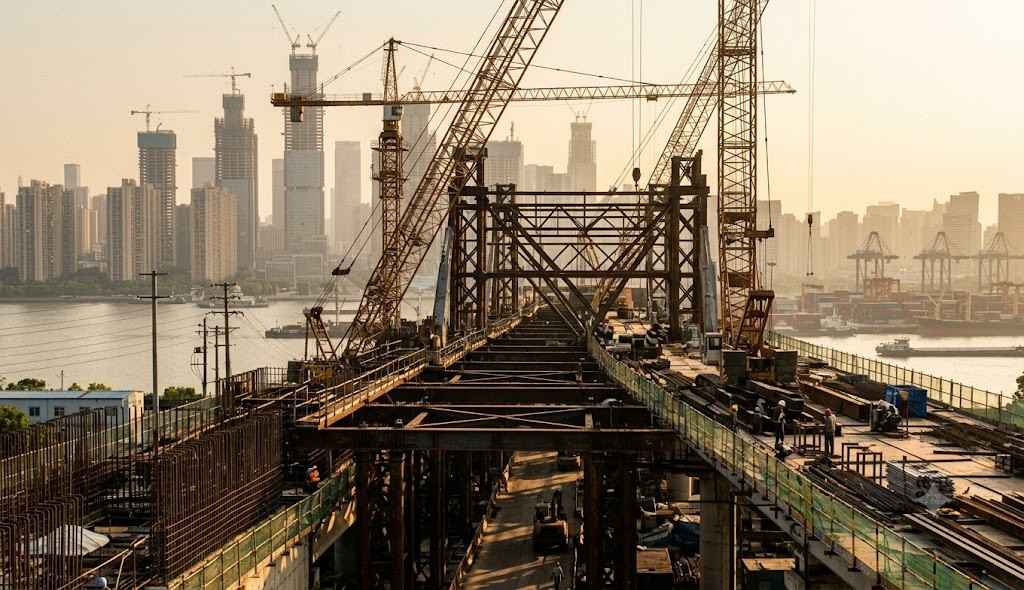
A big piece of that involves something China’s been calling its “Six Networks” program, a roughly $1 trillion infrastructure push covering things like data centers and underground utility systems. Officials specifically flagged that construction on these projects needs to move faster and get more financial backing.
This is a notable shift. China had actually been tightening its belt earlier this year. Its budget deficit had narrowed in May for the first time in over two years, essentially a quiet austerity approach that hadn’t done much to help an economy already struggling with weak demand. Now Beijing appears to be reversing course, betting that spending more, not less, is what gets growth back on target.
Part of what makes this reversal possible is a separate, technical fix working its way through the system. Chinese provinces have been in the process of refinancing a mountain of local government debt, and as that process nears completion, local officials may finally have more room to fund new infrastructure projects instead of just servicing old debt.
Why This Isn’t Just China’s Problem
A slower Chinese economy ripples outward in a few concrete ways worth understanding.
China buys a lot of raw materials, energy, and industrial goods from the rest of the world to fuel its manufacturing and construction sectors. When domestic investment slows, especially in property and infrastructure, demand for those imports softens too, which affects commodity prices and the economies of countries that export heavily to China.
There’s also a global supply angle. China’s export strength this quarter, especially around EVs and AI-related manufacturing, has already drawn criticism from trading partners who argue that heavy state subsidies are flooding global markets with cheap goods, which puts pressure on manufacturers in other countries trying to compete on price.
And this slowdown isn’t happening in isolation. It’s landing at the same time as a separate global shock, the ongoing war between the US and Iran, which has driven up oil prices and disrupted shipping routes since late February. Chinese exporters have actually held up reasonably well despite that disruption, which says something about how resilient global supply chains have become, but it also means China is absorbing multiple pressures at once heading into the back half of the year.
What to Watch From Here
Most economists surveyed still expect China to land close to its growth target for the year, somewhere around 4.6%, even after this weak quarter, largely because of how strong the first quarter was and how much stimulus the government now appears willing to deploy.
The bigger question hanging over all of this isn’t really whether Beijing hits an arbitrary number by December. It’s whether pouring more money into infrastructure and exports keeps working as a growth strategy when the actual imbalance is that Chinese households aren’t spending enough. Analysts have been raising that structural concern for years now, and this quarter’s numbers are the latest reminder that it hasn’t gone away, no matter how many new data centers and pipelines get built.

